
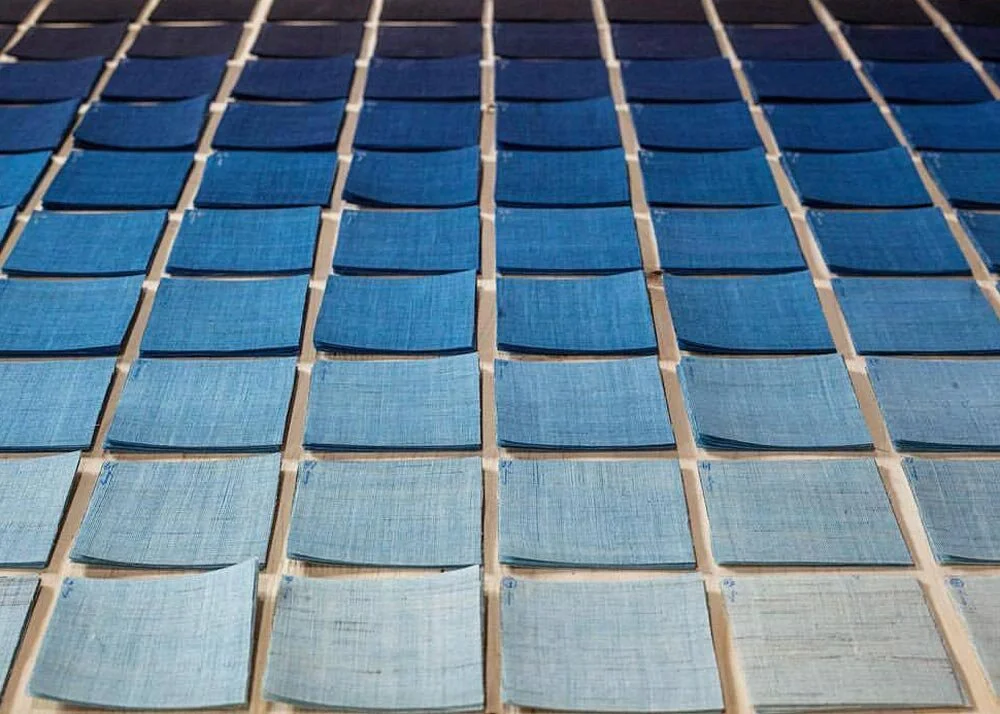
“The deeper the blue becomes, the more strongly it calls man towards the infinite, awakening in him a desire for the pure and, finally, for the supernatural…The brighter it becomes, the more it loses its sounds, until it turns into silent stillness and becomes white.” – Wassily Kandinsky
Indigo is known as blue gold and the “king of dyes” and even served as currency during the American Revolution. For centuries it was reserved for royalty until synthetic indigo dye became commercialized in the late 19th century.
The more I dive into learning about Indigo, the more I am enamored and bespelled. This heritage craft merges skill, patience, trust in the process, persistence, focus, tending to the Land and her plants, imagination, and creation.
Indigo is hypoallergenic, insect and moth repelling, has UV protection properties, and is fire retardant, which is why it’s found in Traditional Japanese fire fighter uniforms.
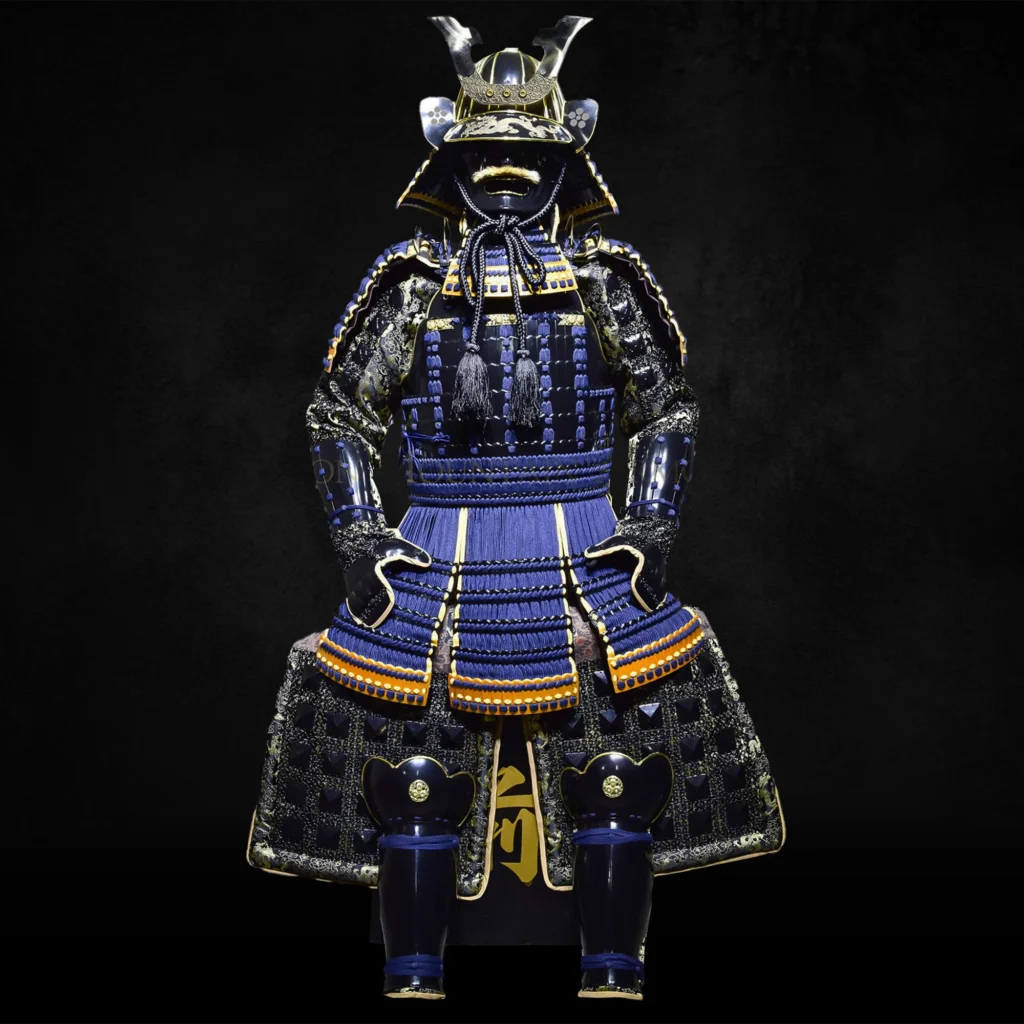
Edo Period Blue Samurai Armor Courtesy Pacific Armory
Samurai warriors used to weave threads within their armor that were dyed in the darkest shade of indigo, a black-blue called “kachi iro,” known as the color of victory. And as Indigo is anti-microbial, these threads of victory also provided aid in wound healing and infection prevention.
Indigo is said to have 48 shades, all with names in Japanese.
One of the first speciality professions, indigo dyeing has its presence in every culture. Most colonial homesteads had an indigo vat.
Natural Indigo dyeing is regenerative and connects us to the land. The sukumo (fermented Japanese Indigo) process takes one full year and was necessitated because of man’s adaptation to the rhythms of nature: the indigo dyers in the north of Japan needed to make their seasonal indigo harvest last all year round, so they developed the fermentation process to utilize their harvested indigo leaves all year round.
With fermented Indigo dyeing, we are invited to slow down and practice regeneration. We feed the dried and harvested leaves of the plant to the vat, feeding the bacteria that is necessary for fermentation. When a vat is exhausted (no longer yielding blues), we rinse out the vat and pliant matter residue; returning the water and plant back to earth.
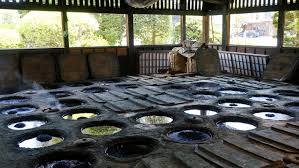
The Higeta Aizome Indigo Dyeing Studio in Mashiko, Tochigi Prefecture, dates back to the Kansei era (1789–1801 CE) of the Edo period. Courtesy Japan House London.
In the Tokushima prefecture in the west of Japan, where now only roughly twelve sukumo dyers still practice this ancient craft, people will sing to their vat, (which they keep within their homes), name their vat, and some say, even will feed it sake. Much like a sourdough starter “mother” that anthropomorphizes and is bestowed a personality or nickname, sukumo vats require daily feedings, stirrings, and ph testing, and thusly, become a part of our home lives.
Sukumo dyeing peaked in the 17th century with 1600 indigo farms. Unfortunately, now there are only roughly twelve still in operation. This is due to the development of synthetic Indigo in the late 19th century by German chemist, Adolf von Baeyer. Soon after, Levi Strauss commercialized synthetic indigo when he patented blue jeans with rivets which almost completely replaced the naturally derived indigo dye from the world market.
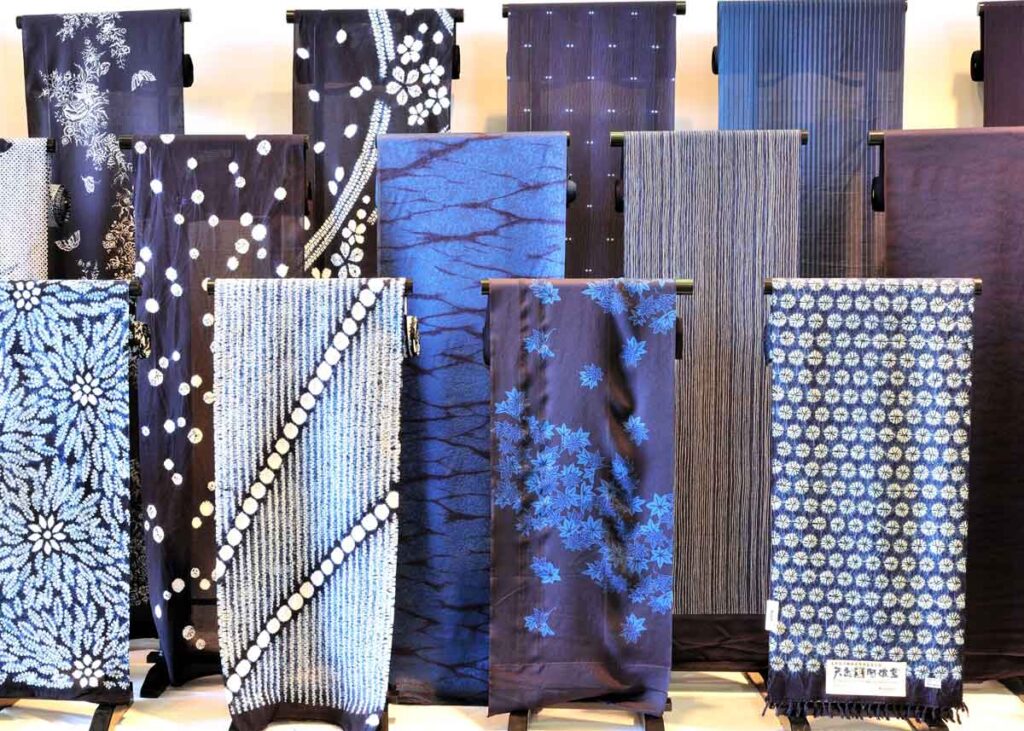
Courtesy Japan Objects
We must continue the cultivation and teaching of these ancestral techniques because they continue our connection to our ancestors, the land, the slow, and the sacred.
Only with natural indigo can you achieve violets and greens. Natural, dark indigo, when beaten, turns shimmery copper, much like the copper sheen on the surface of the fermented vats. Synthetic indigo is made from coal tar and petroleum and the commercialization of synthetic indigo not only made countless multi-generational artisans obsolete in every culture, but its impact on the environment has been quite dire.
Indigo dyeing involves transformation and chemistry, as the leucoindigo (“indigo white,”) aka soluble indigo begins as a yellowish molecule before transforming, via exposure to oxygen, into blue. This is, as Catherine Ellis great dye teacher, once wrote is, “one of chemistry and dyeing’s grand Mysteries.”
Hi, this is a comment.
To get started with moderating, editing, and deleting comments, please visit the Comments screen in the dashboard.
Commenter avatars come from Gravatar.